

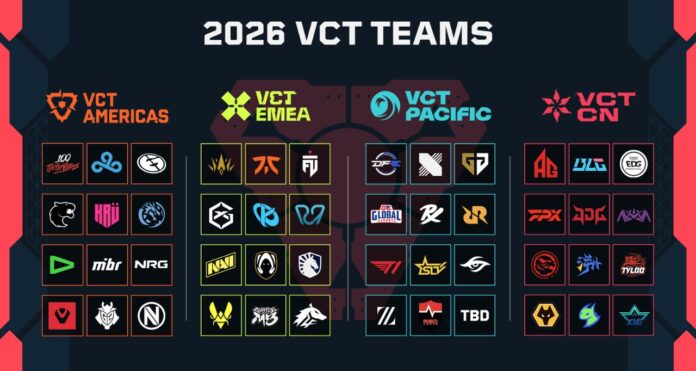
Riot Games just announced massive changes to VALORANT Champions Tour 2026. The new format includes triple elimination brackets, expanded Masters events, and a revolutionary path for Challengers teams to reach Champions.
Triple Elimination Kickoff

The 2026 season starts January with a brand-new triple elimination format for Kickoff tournaments. Teams need three losses before elimination instead of the traditional two in double elimination brackets.
This creates three separate brackets where upper, middle, and lower bracket winners all qualify for Masters Santiago. There’s no traditional grand final, instead the competition ends once three teams secure qualification through their respective brackets.
Regional Kickoff dates are Americas on January 15, EMEA on January 20, and both Pacific and China on January 22. The format ensures every team plays more matches and has multiple chances to prove themselves.
Masters Santiago Expands to 12 Teams
The first Masters of 2026 will feature 12 teams instead of the usual eight. This means the top three teams from each region qualify for Masters Santiago running February 28 to March 15 in Chile.
Previously, only the top two teams per region made the first Masters event. The expansion creates more international competition early in the season and puts more Championship Points up for grabs.
Masters London follows June 6-21 as the second international event, while Champions Shanghai caps off the year as the world championship.
Challengers Teams Get Champions Path

The biggest change replaces Ascension temporarily with the “Challengers Path to Champions.” For the first time ever, tier-two teams can qualify directly for the world championship without waiting a full year.
Each International League will send four Challengers teams to Stage 2 Playoffs. These teams compete alongside VCT squads for spots at Champions Shanghai. Qualifying Challengers teams receive travel stipends and compensation from digital goods sales.
This creates a truly open pathway where any team can reach Champions in the same year through strong Challengers performance. Riot describes this as making VCT more accessible and merit-based.
More Matches, Higher Stakes
The regular season abandons group formats to ensure every team plays equal matches. Combined with expanded international events and Challengers integration, the 2026 calendar becomes much denser.
These changes represent the beginning of VCT’s next era, with Riot planning even larger structural overhauls for 2027.